

Slurry Pumps in Pakistan – Heavy-Duty Pumps for Abrasive Industrial Applications
Discover high-performance slurry pumps in Pakistan for mining, construction, wastewater, and industrial applications. Compare options and choose the best pump.
Introduction
Slurry pumps are specially engineered centrifugal pumps designed to transport liquids containing solid particles, abrasive materials, or high-density slurries. Unlike standard water pumps, slurry pumps feature reinforced components and wear-resistant materials that withstand harsh operating conditions while maintaining reliable performance.
Industries across Pakistan—including mining, cement, construction, steel, power generation, wastewater treatment, fertilizer manufacturing, and chemical processing—depend on slurry pumps for efficient material handling. Whether transporting sand, ash, tailings, sludge, lime slurry, or mineral concentrates, selecting the right slurry pump significantly improves productivity while reducing maintenance costs and equipment downtime.
What Is a Slurry Pump?
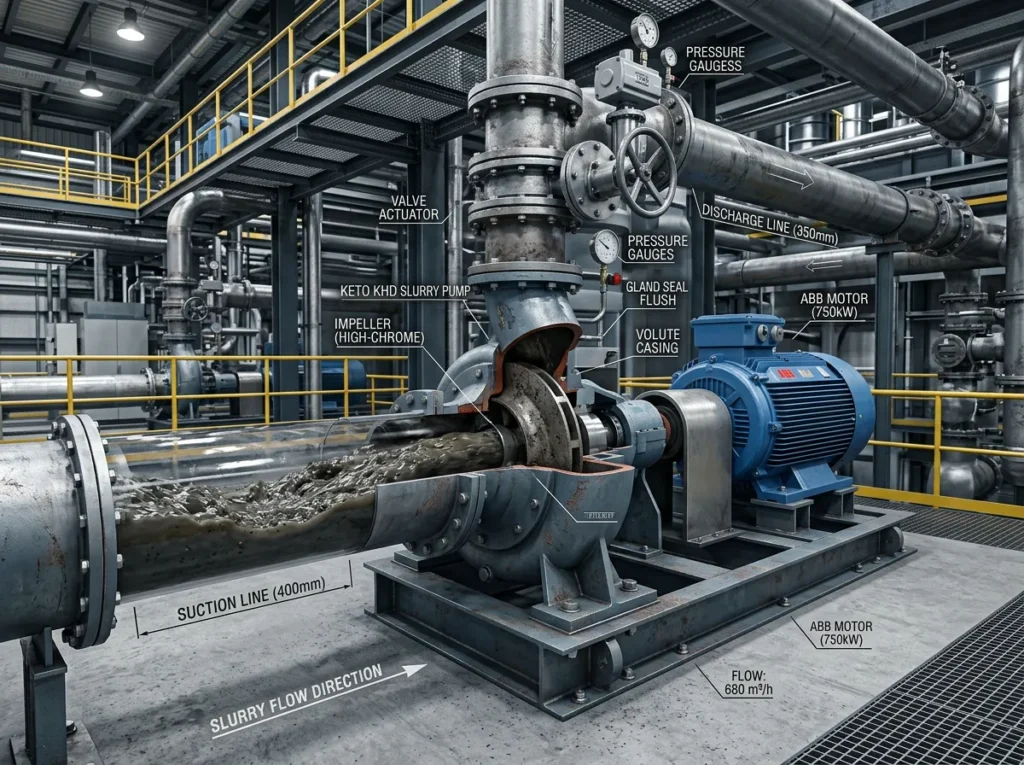
A slurry pump is a heavy-duty centrifugal pump specifically designed to move liquids mixed with solid particles such as sand, ore, ash, sludge, or mineral slurry. It uses abrasion-resistant materials and robust hydraulic designs to handle high-wear applications that standard pumps cannot.
Types of Slurry Pumps
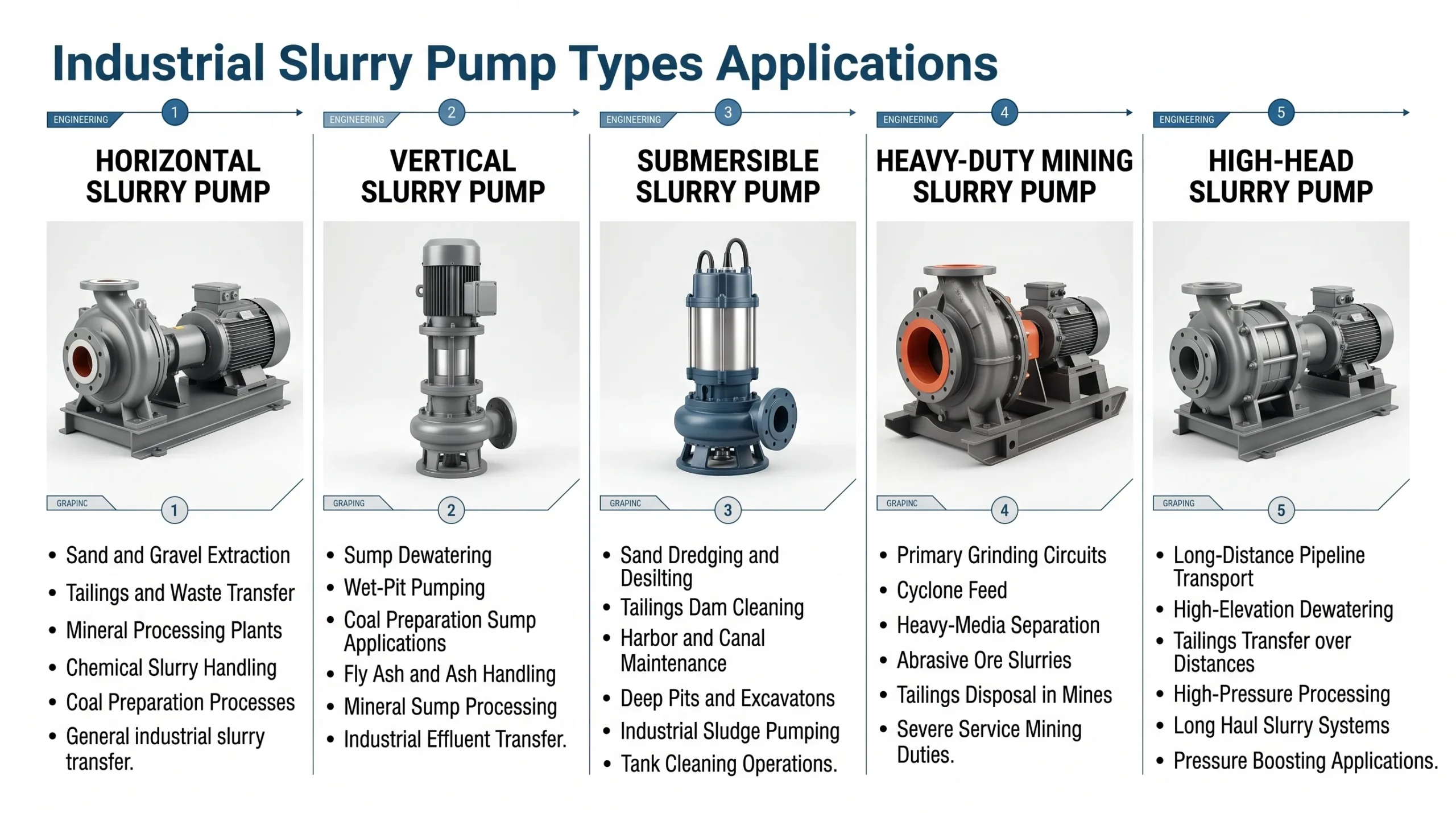
Different industries require different slurry pump configurations depending on particle size, slurry concentration, installation location, and operating conditions
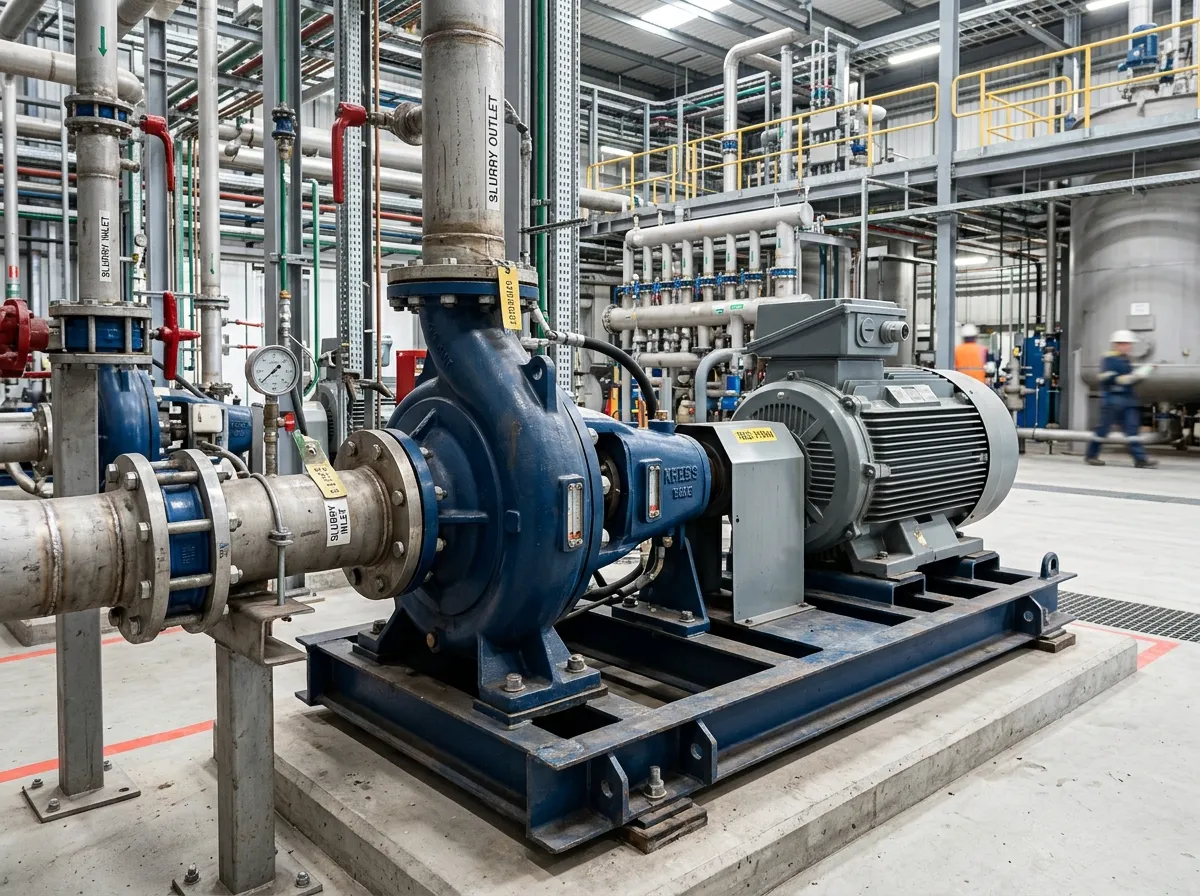
Horizontal Slurry Pumps
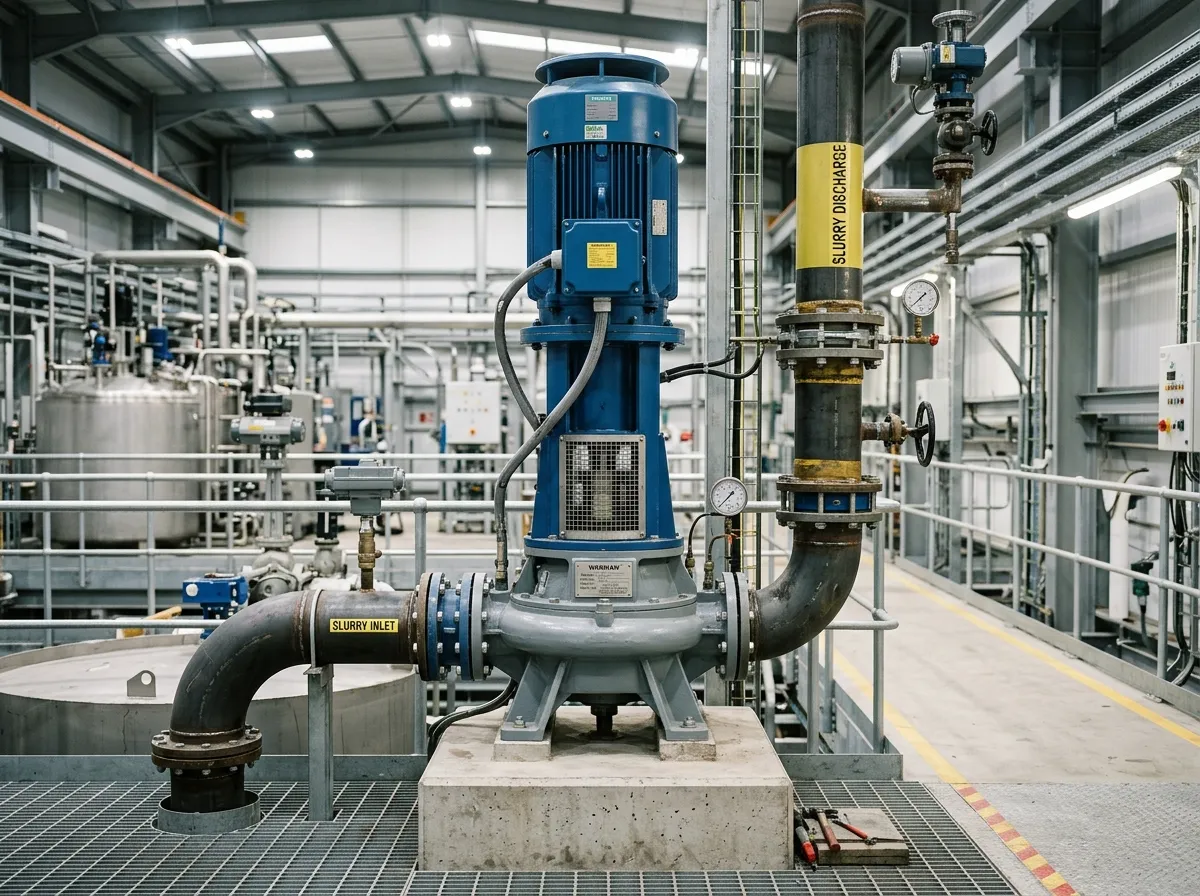
Vertical Slurry Pumps
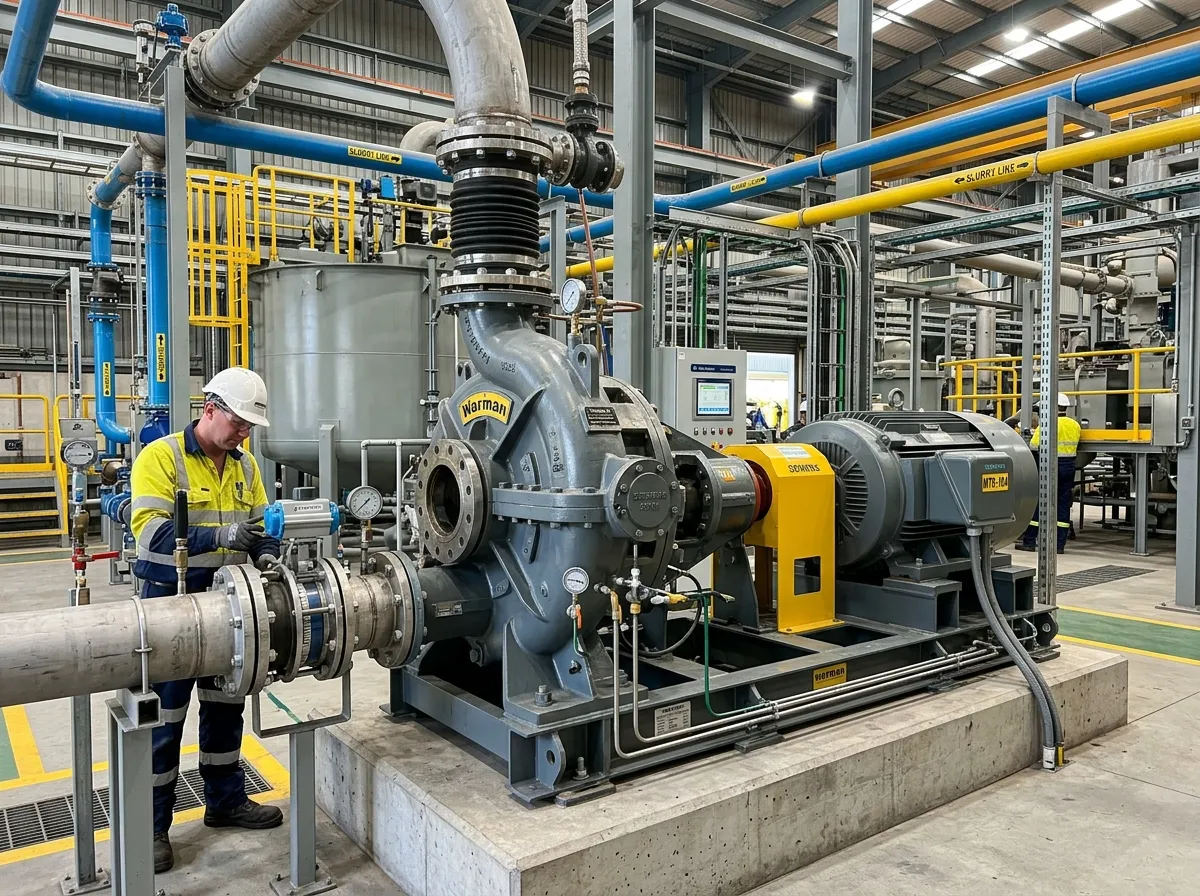
Heavy-Duty Centrifugal Slurry Pumps
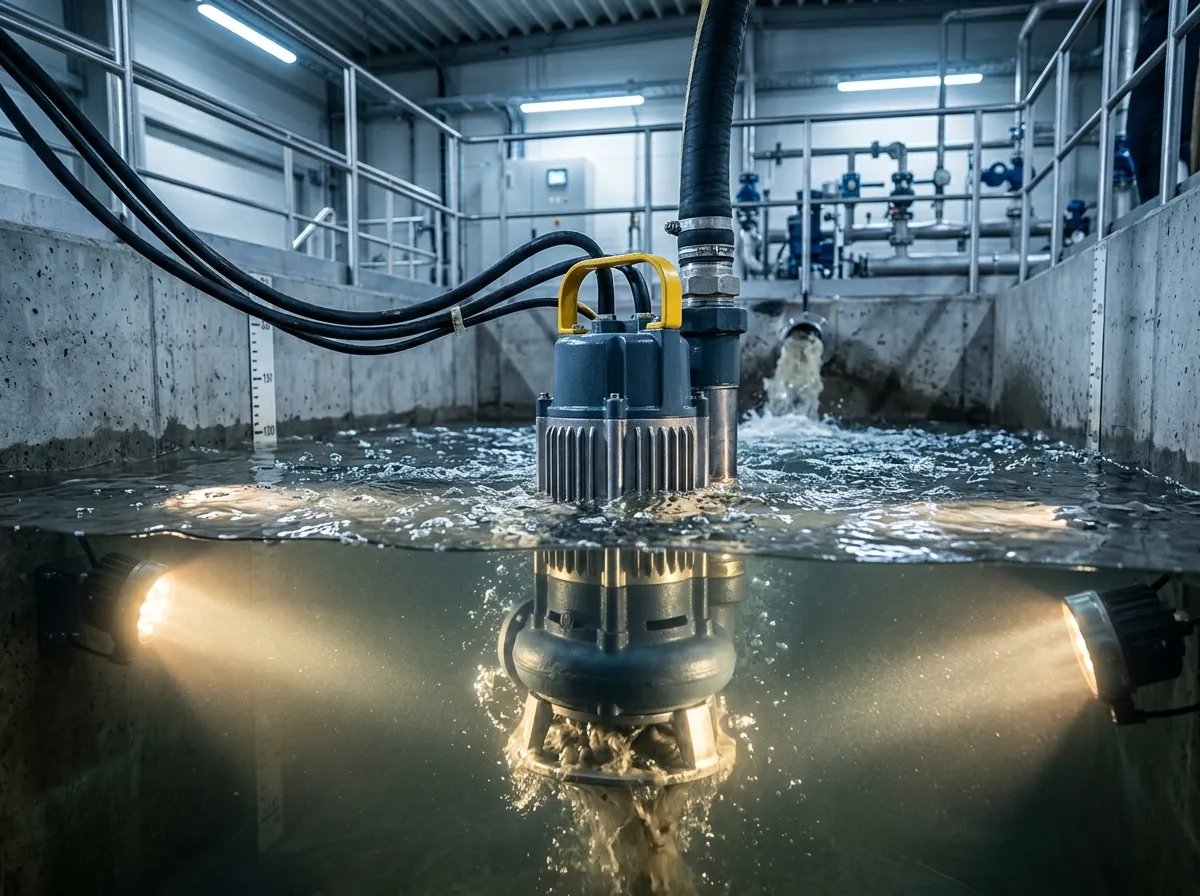
Submersible Slurry Pumps
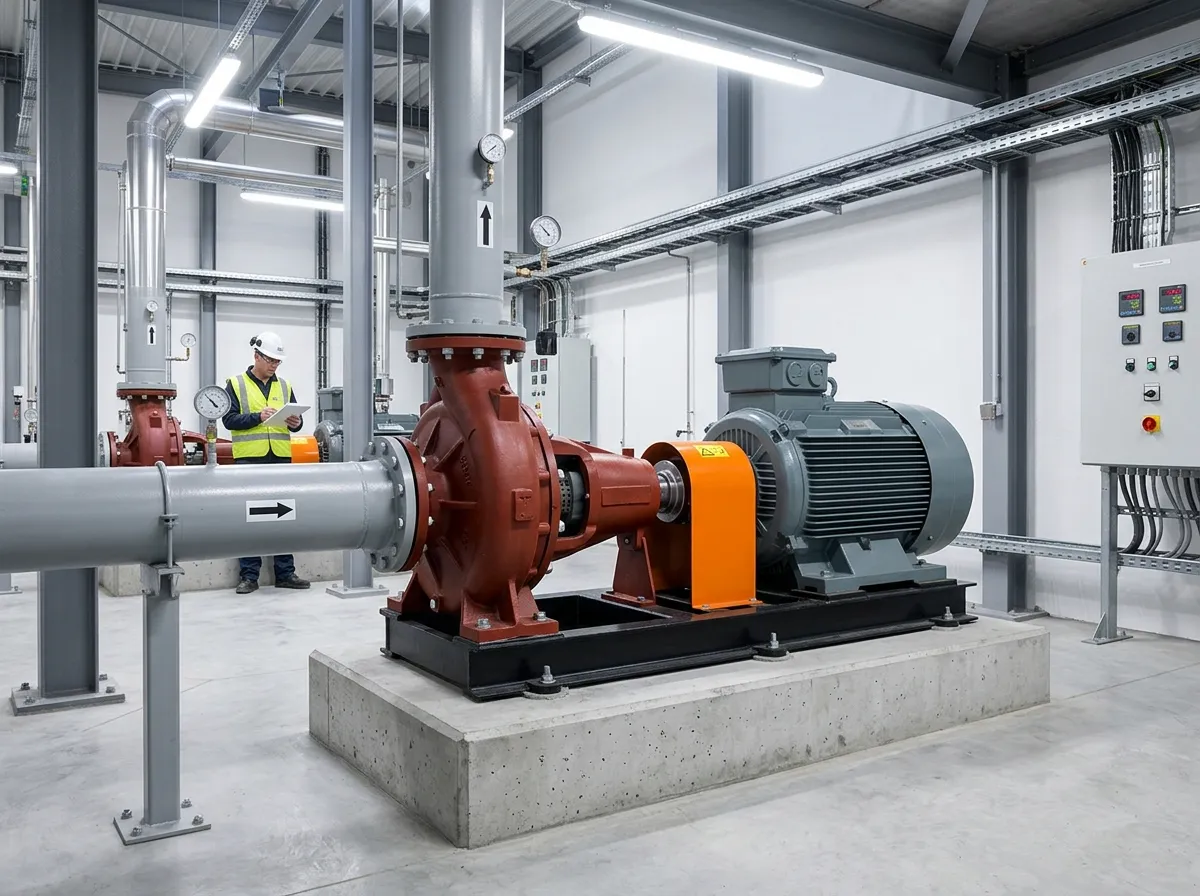
High-Head Slurry Pumps
How Does a Slurry Pump Work?
A slurry pump works by using a rotating impeller to create centrifugal force, which moves a mixture of liquid and solid particles from the suction side to the discharge side. Its wear-resistant internal components allow it to transport abrasive materials without rapid deterioration.
Step-by-Step Working Principle
- Slurry enters through the suction inlet.
- The rotating impeller accelerates the slurry.
- Centrifugal force increases the slurry’s velocity.
- The volute casing converts velocity into pressure.
- Pressurized slurry exits through the discharge outlet.
- Continuous rotation maintains a steady flow.
Unlike standard water pumps, slurry pumps maintain performance while handling abrasive solids, larger particle sizes, and higher slurry densities.
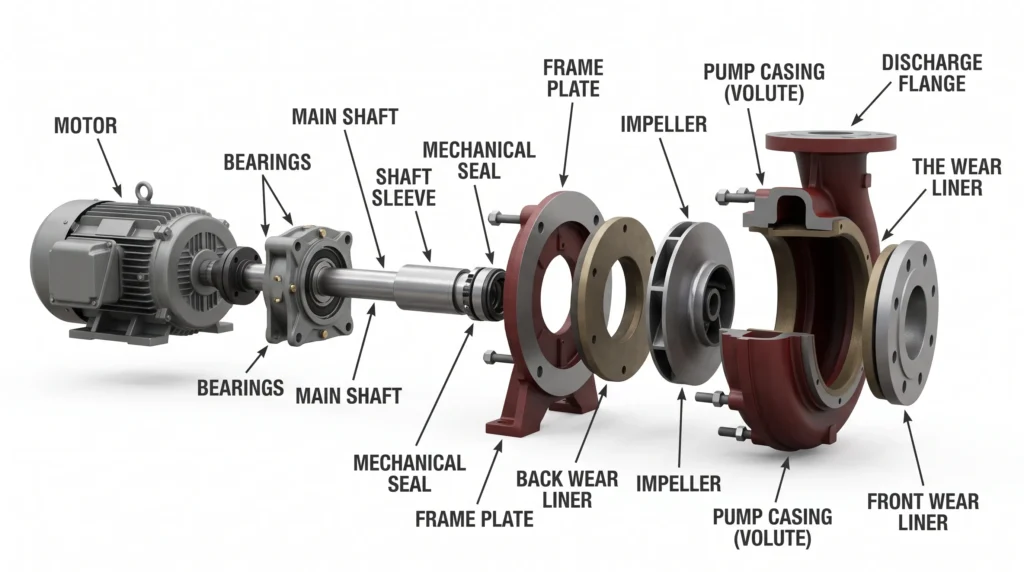
Main Components of a Slurry Pump
Benefits of Slurry Pumps
Choosing the correct slurry pump offers significant operational and financial advantages
Slurry Pump Buying Guide
Selecting the right slurry pump is essential for maximizing efficiency, minimizing maintenance costs, and ensuring reliable operation. Since slurry pumps handle abrasive solids and high-density fluids, choosing a standard centrifugal pump can lead to premature wear and costly downtime. Consider the following factors before purchasing a slurry pump.

1
Understand Your Slurry Characteristics
The type of slurry is the most important factor when selecting a pump.
Evaluate:
- Solid particle size
- Solid concentration (%)
- Slurry density
- Fluid viscosity
- Abrasiveness
- Corrosive properties
- Operating temperature
Highly abrasive slurries require hardened metal components, while corrosive chemicals may need rubber-lined or stainless steel pumps.
2
Determine the Required Flow Rate
Calculate how much slurry must be transported per hour.
Consider:
- Process capacity
- Required production output
- Future expansion
- Continuous or intermittent operation
Selecting an undersized pump reduces productivity, while an oversized pump wastes energy and increases operating costs.
3
Calculate the Total Head
Total Dynamic Head (TDH) determines the pressure the pump must generate.
It includes:
- Vertical lifting height
- Pipeline length
- Friction losses
- Valve losses
- Discharge pressure
Accurate head calculations ensure the pump operates within its Best Efficiency Point (BEP).
4
Select the Appropriate Pump Type
Different operating environments require different pump designs.
- Horizontal Slurry Pumps – Best for general industrial processing.
- Vertical Slurry Pumps – Ideal for sumps, pits, and tanks.
- Submersible Slurry Pumps – Suitable for underwater pumping and dredging.
- Heavy-Duty Slurry Pumps – Designed for highly abrasive applications.
- High-Head Slurry Pumps – Perfect for long-distance slurry transportation.
5
Consider Wear Resistance
Since slurry contains abrasive particles, wear resistance is critical.
Look for:
- Replaceable wear liners
- Hardened impellers
- Thick pump casing
- Heavy-duty bearings
- Wear-resistant shaft sleeves
These features reduce maintenance frequency and extend equipment life
6
Evaluate Maintenance Requirements
Choose pumps designed for easy servicing.
Important considerations include:
- Easy access to wear parts
- Replaceable liners
- Standardized spare parts
- Local service availability
- Simple seal replacement
Routine maintenance becomes faster and more cost-effective with service-friendly designs.
Common Buying Mistakes to Avoid
Avoid these mistakes when purchasing a slurry pump:
Choosing a standard water pump for abrasive slurry
Ignoring particle size and slurry density
Incorrect head calculations
Selecting unsuitable pump materials

Purchasing based only on initial price
Overlooking spare parts availability
Ignoring maintenance requirements
Failing to consult pump performance curves
Slurry Pump Maintenance Tips
Regular maintenance helps maximize pump performance, reduce downtime, and extend service life.
Inspect Wear Components Regularly
Check impellers, liners, shaft sleeves, and casings for signs of wear or erosion. Replace worn parts before they affect pump performance.
Monitor Bearing Condition
Lubricate bearings according to the manufacturer’s recommendations and replace them if excessive noise or vibration occurs.
Check Mechanical Seals
Inspect seals and gland packing for leakage. Timely replacement prevents fluid loss and protects internal components.
Avoid Dry Running
Never operate a slurry pump without sufficient liquid, as dry running can quickly damage seals, bearings, and impellers.
Maintain Proper Alignment
Regularly verify motor and pump shaft alignment to minimize vibration and reduce premature wear.
Agriculture
Flush the pump and pipelines after handling abrasive or corrosive materials to prevent blockages and material buildup.
Monitor Operating Parameters
Track pressure, flow rate, temperature, vibration, and power consumption. Unexpected changes may indicate wear or developing mechanical issues.
Use Genuine Spare Parts
Always replace worn components with high-quality, compatible parts to maintain reliability and performance.
REVSOL- PAKISTAN
WE OFFER
At Revsol, we understand that every industrial application has unique pumping requirements. That's why we supply high-quality slurry pumps designed for reliable performance in demanding environments across Pakistan.
We offer slurry pump solutions suitable for:
Mining operations
Wastewater treatment
Cement plants
Power generation
Fertilizer manufacturing
Construction projects
Chemical industries
Industrial process plants
FAQ
What is a slurry pump?
A slurry pump is a heavy-duty centrifugal pump designed to transport abrasive liquids containing solid particles such as sand, sludge, ash, and minerals. It is built with wear-resistant materials for demanding industrial applications.
How does a slurry pump work?
A slurry pump uses a rotating impeller to generate centrifugal force, moving slurry from the suction inlet to the discharge outlet. Its robust construction allows it to handle abrasive and high-density fluids efficiently.
What industries use slurry pumps?
Slurry pumps are widely used in mining, cement, chemical processing, fertilizer manufacturing, wastewater treatment, power generation, and construction industries. They are ideal for transporting abrasive and solids-laden fluids
What is the difference between a slurry pump and a water pump?
A slurry pump is specifically designed to handle abrasive slurries containing solid particles, while a water pump is intended for clean or lightly contaminated liquids. Slurry pumps feature stronger construction and superior wear resistance.
How do I choose the right slurry pump?
Choose a slurry pump based on slurry characteristics, flow rate, total dynamic head (TDH), particle size, and material compatibility. Selecting the correct pump improves efficiency, reliability, and service life.
What materials are slurry pumps made from?
Slurry pumps are commonly manufactured from high-chrome alloy, stainless steel, ductile iron, and rubber-lined materials. The material is selected according to the slurry’s abrasiveness and corrosiveness.
How often should slurry pumps be maintained?
Slurry pumps should be inspected and maintained regularly according to operating conditions and manufacturer recommendations. Routine maintenance helps reduce downtime, improve performance, and extend equipment life.
Where can I buy slurry pumps in Pakistan?
You can buy high-quality slurry pumps from Revsol, a trusted supplier of industrial pumps and equipment in Pakistan. Revsol offers reliable pumping solutions for mining, chemical, wastewater, cement, and other industrial applications.
Why Choose Revsol
Whether you need a horizontal, vertical, submersible, heavy-duty, or high-head slurry pump, Revsol can help you choose the right solution for your operational requirements. Our team is committed to providing dependable pumping equipment that delivers long-term performance, improved efficiency, and reduced maintenance costs.