

Fire Foam and Gas Suppression System
Introduction
Fire foam suppression system technology is widely used to control fires involving flammable liquids in industrial and commercial environments. Unlike traditional water-based protection, these systems use foam agents and specialized gases to quickly suppress flames and reduce damage to equipment and infrastructure.
Modern fire suppression systems are essential for facilities such as fuel storage areas, manufacturing plants, warehouses, and chemical processing units. By combining foam technology with advanced gas suppression methods like CO2 fire suppression system and FM200 fire suppression system, businesses can improve safety, protect assets, and maintain compliance with fire protection standards.
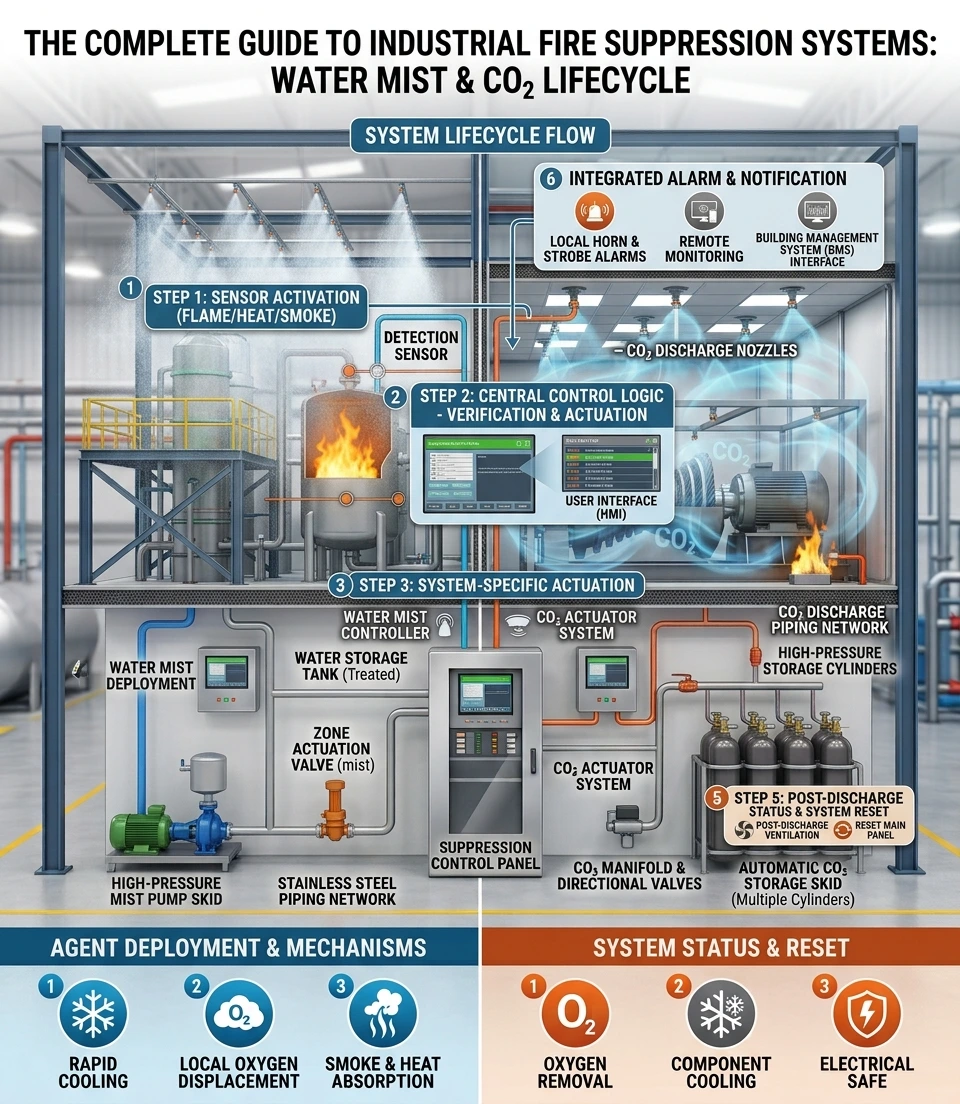
What Are Fire Foam Suppression System and Gas Suppression Systems?
A fire foam and gas suppression system is an automatic fire protection solution designed to extinguish fires using foam concentrates or specialized gases rather than water.
These systems are engineered for environments where conventional sprinkler systems may not be suitable.
Defination
Fire foam suppression systems extinguish fires by creating a foam blanket that covers the burning fuel surface, cutting off oxygen and preventing flames from spreading.
Gas fire suppression systems release inert gases or clean agents that interrupt the combustion process and suppress the fire without leaving residue.
These technologies allow businesses to protect both personnel and valuable infrastructure during fire emergencies.
Understanding Fire Suppression Systems
A fire suppression system is designed to detect and extinguish fires before they spread. These systems work automatically by releasing suppression agents that stop the combustion process.
Fire suppression solutions are typically used in environments where traditional sprinkler systems may not provide sufficient protection.
Common suppression technologies include:

Foam Fire Suppression System

Gas Fire Suppression System

CO2 Fire Suppression System
FM200 Fire Suppression System
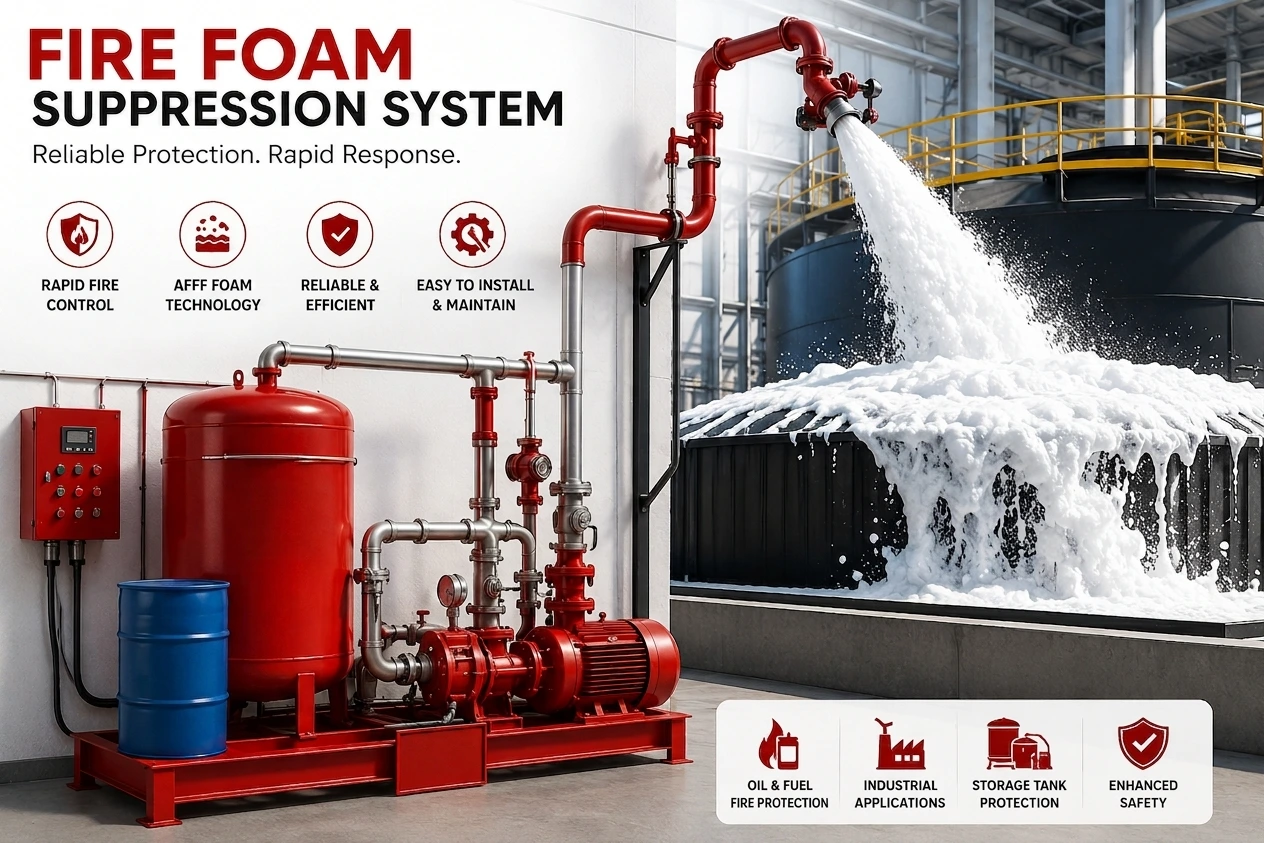
Foam Fire Suppression System
A foam fire suppression system is designed to control fires involving flammable liquids such as fuel, oil, and chemicals. The system produces a foam blanket that spreads over the burning liquid surface, preventing oxygen from reaching the fire.
Foam suppression systems are particularly effective for Class B fire hazards, which involve flammable liquids.
Common Applications
Foam suppression systems are widely used in:
- Oil and gas facilities
- Fuel storage terminals
- Chemical processing plants
- Aircraft hangars
- Industrial manufacturing plants
- Warehouses storing flammable materials
These systems provide fast fire control and significantly reduce the risk of large-scale fire incidents.
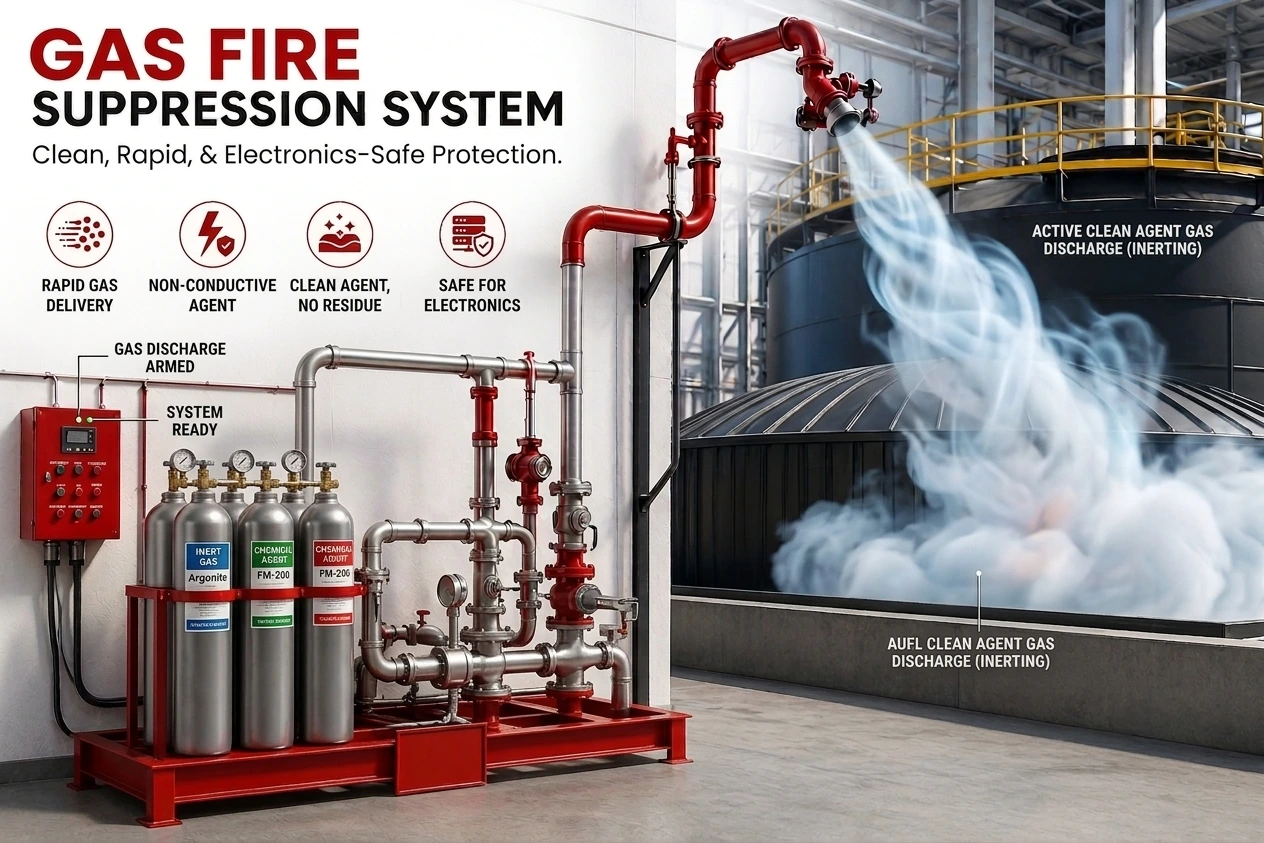
Gas Fire Suppression Technologies
A gas fire suppression system extinguishes fires using inert gases or clean agents instead of water. These systems are ideal for protecting sensitive electronic equipment and critical infrastructure.
Gas suppression systems work by reducing oxygen concentration or interrupting the chemical reaction required for combustion.
Because these systems do not use water, they prevent damage to electrical equipment, servers, and data infrastructure.
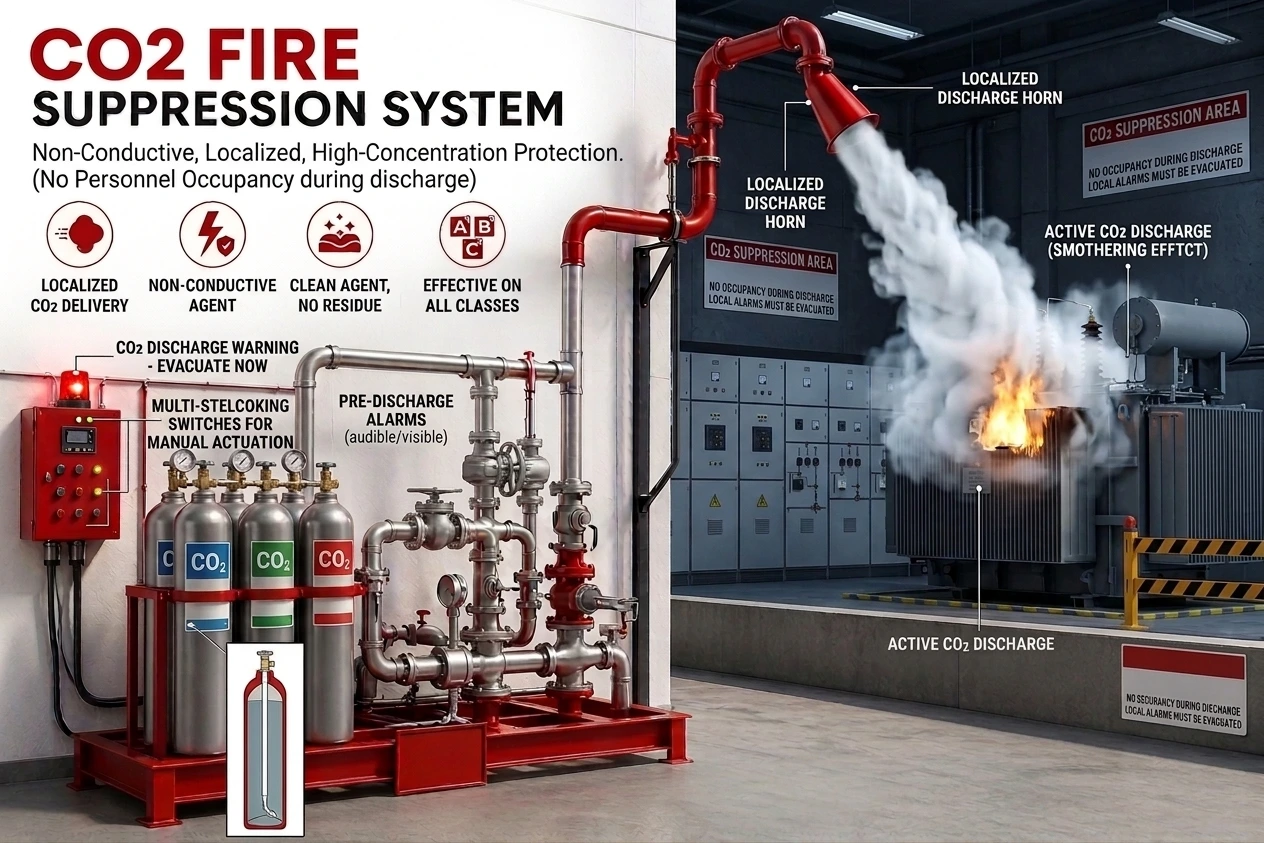
CO₂ Fire Suppression System
A CO₂ fire suppression system uses carbon dioxide gas to extinguish fires by displacing oxygen in the protected area. This effectively stops the combustion process and suppresses the fire quickly.
Typical Applications
CO₂ fire suppression systems are often used in:
- Power plants
- Engine rooms
- Industrial machinery areas
- Electrical switch rooms
- Manufacturing facilities
These systems are particularly effective in areas where rapid fire suppression is required.
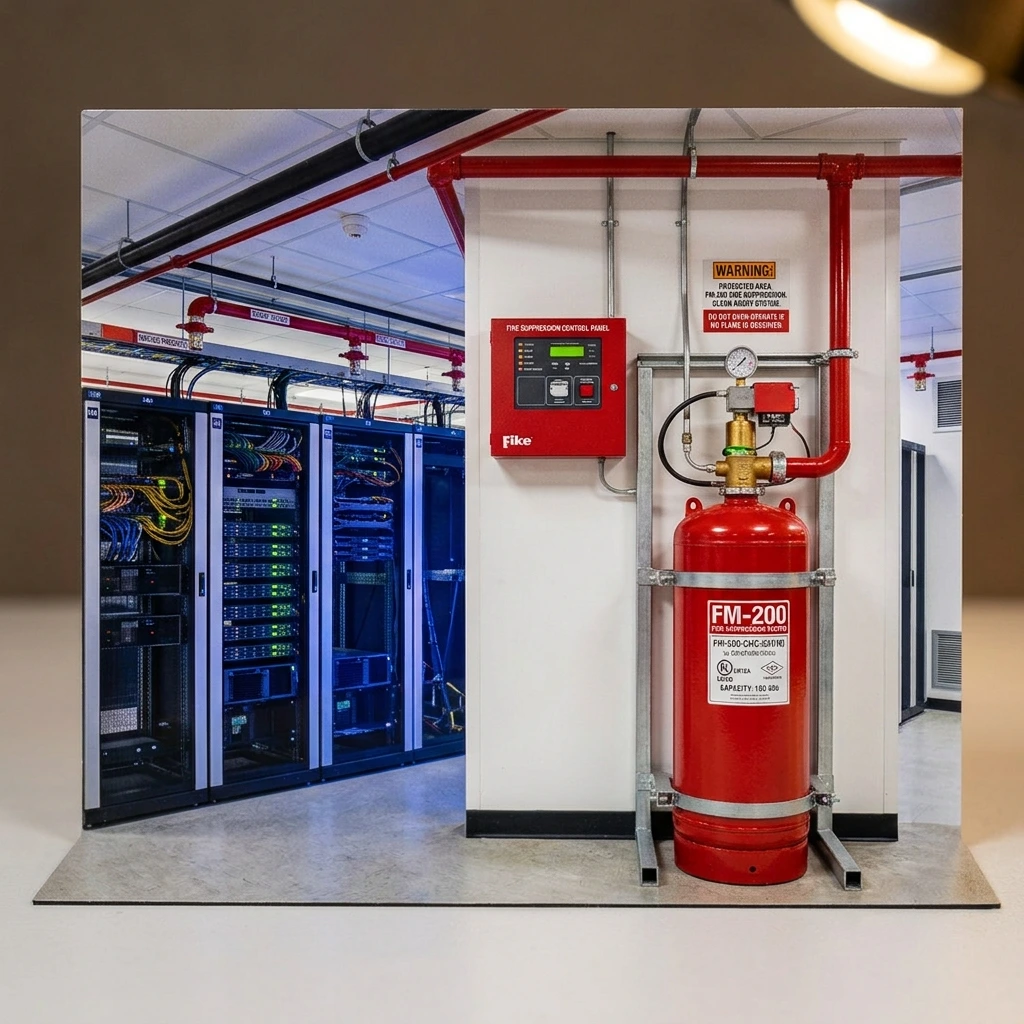
FM200 Fire Suppression System
An FM200 fire suppression system is a clean agent fire protection technology designed to extinguish fires quickly without damaging equipment or leaving residue.
FM200 systems suppress fires by absorbing heat and interrupting the combustion process.
Common Applications
FM200 systems are widely used in environments containing sensitive equipment, including:
- Data centers
- Server rooms
- Telecommunication facilities
- Control rooms
- Museums and archives
Because FM200 leaves no residue and requires minimal cleanup, it is ideal for protecting critical infrastructure.
How Foam-Based Fire Protection Works
A fire foam suppression system works by forming a protective foam blanket over burning liquid surfaces. This foam layer blocks oxygen, cools the fuel, and prevents vapors from igniting.
Foam systems are particularly effective for Class B fires, which involve flammable liquids such as fuel, oil, and chemicals.
Key components Includes:
Foam concentrate tank
Stores the liquid foam concentrate that gets mixed with water to create the fire-suppressing foam solution used during discharge.
Proportioning system
Mixes the foam concentrate with water at the correct ratio, ensuring the foam solution forms properly before it reaches the fire.
Distribution piping
Carries the mixed foam solution from the proportioning system to the discharge points across the protected area.
Discharge nozzles
Release the foam solution over the fire in a controlled spray pattern, forming the blanket that smothers flames and vapors.
Fire detection system
Continuously monitors the protected area and automatically triggers the foam system the moment a fire is detected.

Benefits of Advanced Fire Protection Solutions
Businesses invest in fire suppression technology to improve safety and operational reliability.
Rapid Fire Control
Automatic suppression systems respond immediately when fire is detected, reducing fire damage.
Compliance with Safety Standards
Professional suppression systems are designed according to international fire safety standards such as NFPA guidelines.
Protection of Critical Equipment
Gas suppression systems protect servers, electrical systems, and communication infrastructure without water damage.
Enhanced Workplace Safety
Installing reliable fire protection systems helps protect employees and assets from fire hazards.
Reduced Operational Downtime
Clean agent suppression systems allow businesses to resume operations quickly after fire incidents
Industries That Use Fire Suppression Systems
- Oil and gas industry
- Chemical manufacturing facilities
- Data centers and IT infrastructure
- Commercial buildings
- Warehouses and logistics centers
- Power generation plants
- Industrial manufacturing plants
Professional System Design and Installation
Proper design and installation are critical for ensuring that fire suppression systems operate effectively during emergencies.
Professional fire protection providers typically offer services such as:
Fire Risk Assessment
A fire risk assessment identifies potential fire hazards and evaluates the level of risk within a facility. This process helps determine the most suitable fire suppression system for effective protection.
System Design and Engineering
System design and engineering involve developing a fire suppression solution based on the facility’s layout and fire risks. Proper engineering ensures the system activates quickly and distributes the suppression agent efficiently.
Equipment Supply and Installation
Testing and Commissioning
Maintenance and Inspection
Why Choose Revsol for Fire Protection Solutions
Revsol provides dependable fire protection services designed for industrial and commercial environments.
Our solutions focus on:
- Reliable suppression technologies
- High-quality fire protection equipment
- Professional installation services
- Long-term system performance
With expert guidance and proven fire safety solutions, businesses can implement systems that protect both people and infrastructure.
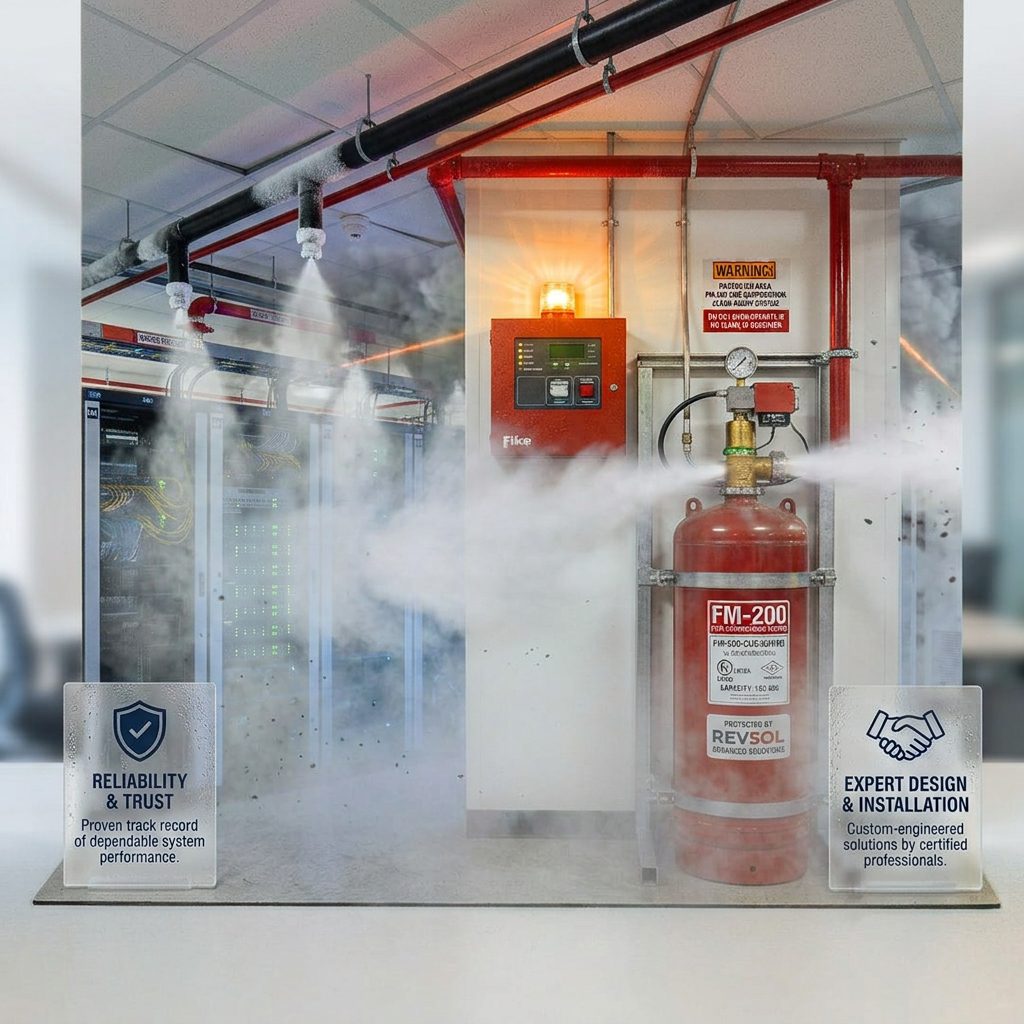
Protect Your Facility with Reliable Fire Suppression
Fire hazards can cause serious operational disruptions and financial losses. Implementing the right fire suppression system helps businesses reduce risks and maintain safe working environments.
Contact Revsol today to discuss the best suppression system for your project and receive expert guidance.
Frequently Asked Questions
What is a fire foam suppression system?
A fire foam suppression system uses foam agents to cover burning liquid surfaces and block oxygen, preventing flames from spreading.
What is a gas fire suppression system?
A gas fire suppression system extinguishes fires by releasing inert gases or clean agents that interrupt the combustion process.
What is the difference between CO₂ and FM200 fire suppression systems?
CO₂ systems suppress fires by reducing oxygen levels, while FM200 systems use a clean agent that absorbs heat and interrupts combustion without significantly reducing oxygen.
Where are fire suppression systems commonly used?
Fire suppression systems are commonly installed in industrial facilities, data centers, power plants, chemical plants, and warehouses.
How often should fire suppression systems be inspected?
Most fire suppression systems should be inspected at least once per year to ensure they remain functional and compliant with fire safety standards.