

STEEL PIPES GUIDE
MS Pipe vs ERW Pipe vs Seamless Pipe: 7 Critical Differences
Compare MS pipe vs ERW vs seamless pipe for construction and industrial use in Pakistan. Learn the key differences, costs, standards and selection criteria.
Introduction
Choosing the wrong steel pipe can increase project costs, complicate installation, or create reliability problems during operation. For buyers comparing MS pipe vs ERW vs seamless pipe in Pakistan, the first step is understanding that these terms describe different characteristics rather than three completely separate products.
MS pipe refers to mild steel material, ERW describes an electric resistance welding process, and seamless pipe is manufactured without a longitudinal weld seam. An ERW pipe can therefore be an MS pipe. Seamless pipes can also be manufactured from suitable carbon steel grades.
For construction frameworks, fabrication, general utilities, and industrial piping, the right choice depends on the intended application, material grade, dimensions, wall thickness, operating pressure, temperature, and applicable standards. Price matters too, but the lowest quotation is not necessarily the most economical choice over the product’s service life.
What are MS, ERW and Seamless pipes?
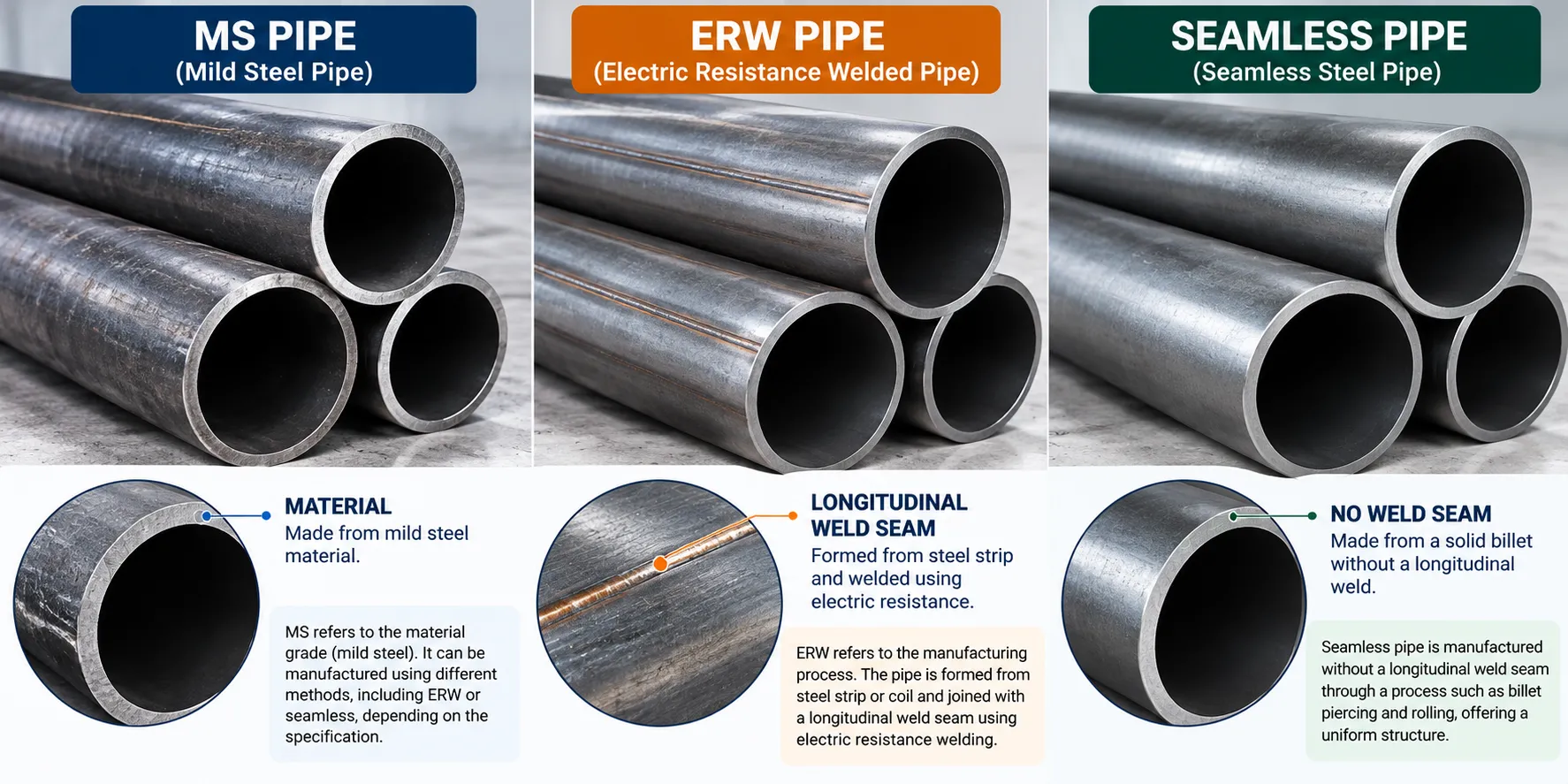
These three terms describes different characteristics of steel pipes. MS refers to mild steel material, ERW refers to manufacturing process and seamless refers to a pipe manufactured without longitudinal weld seam.
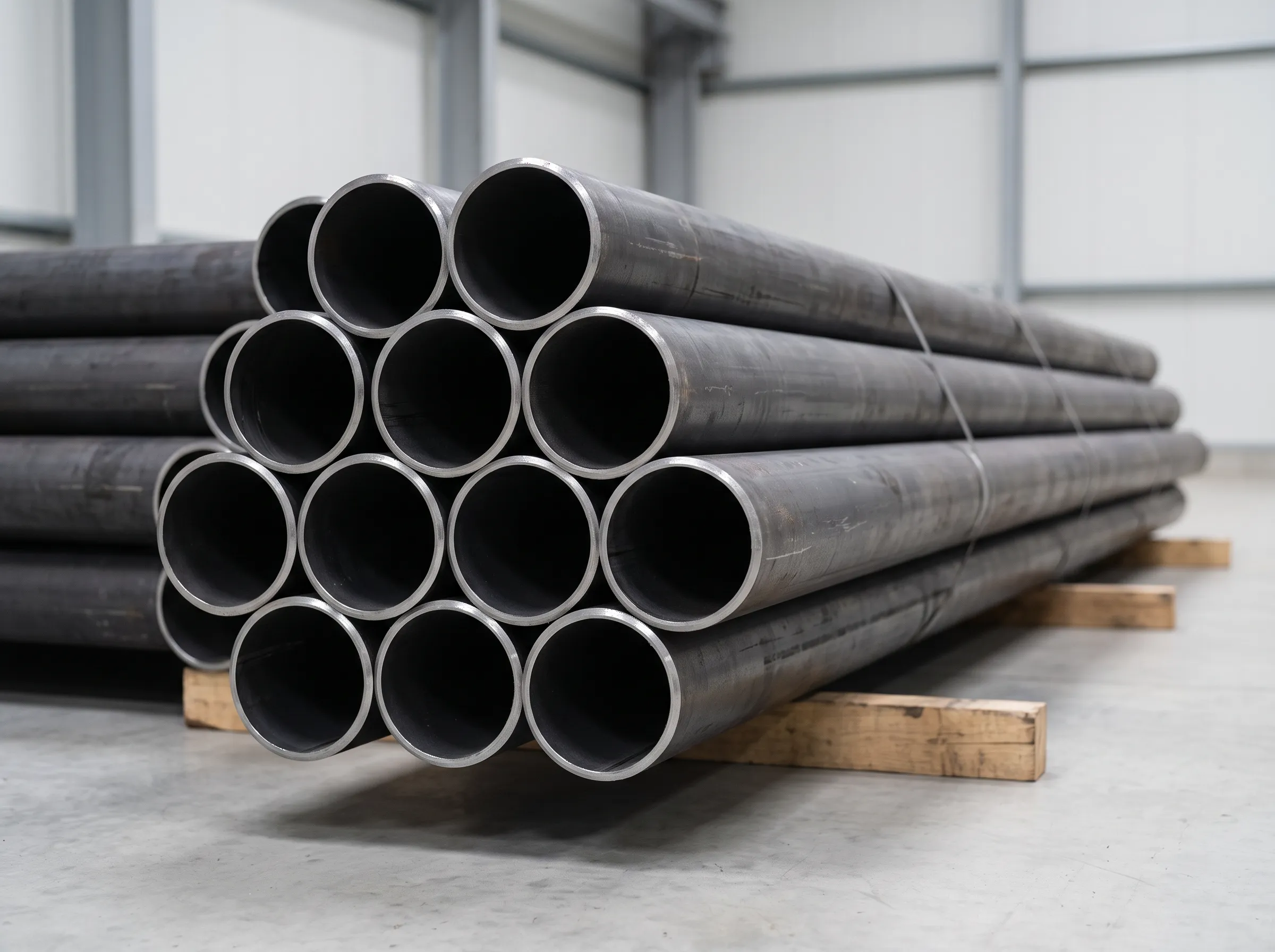
MS Pipe (Mild Steel Pipe)
Made from mild steel. widely used for structural and general purpose applications. Can be manufactured using different methods such as ERW or seamless, depending on the specification.
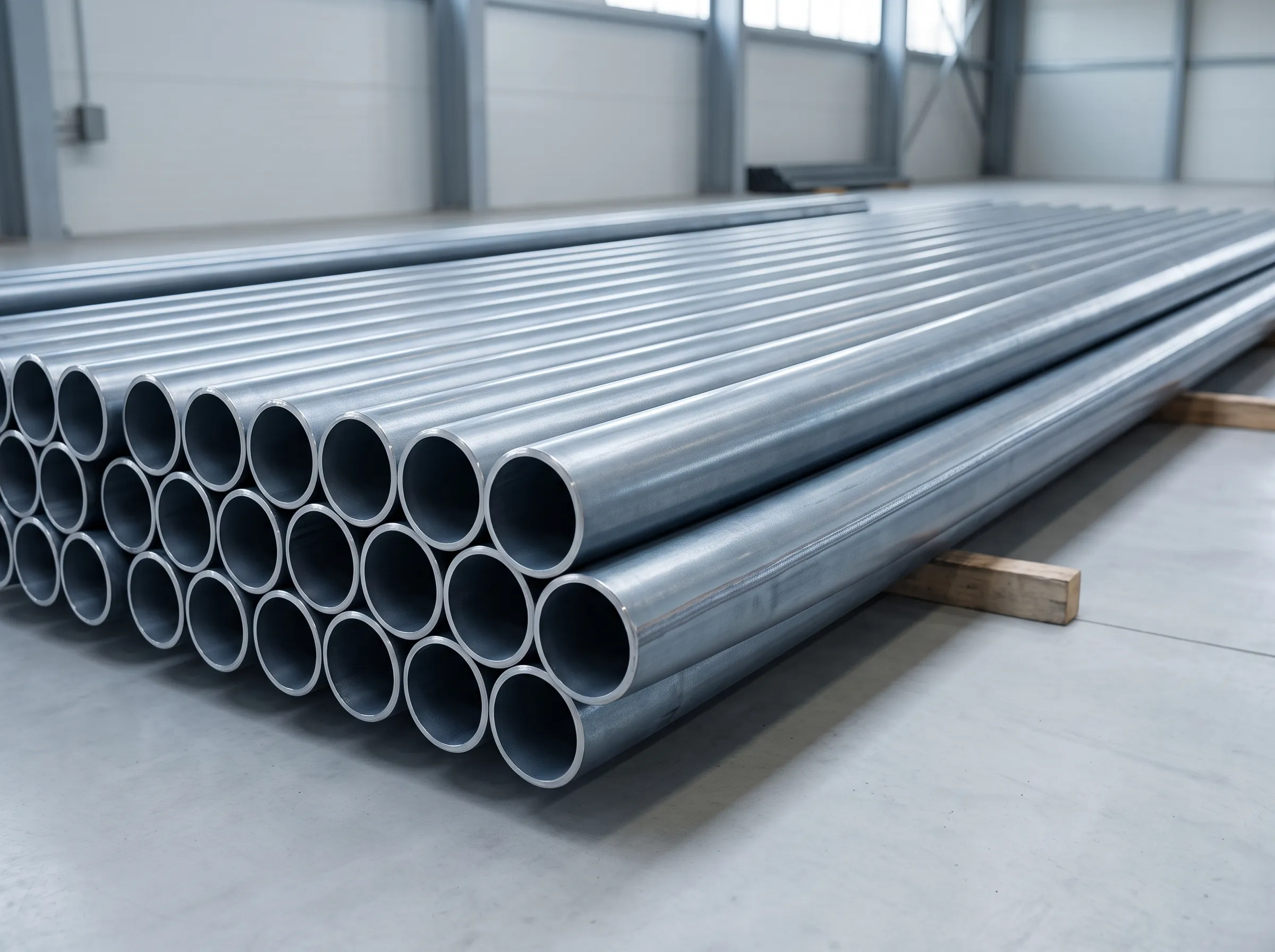
ERW Pipe (Electric Resistance Welded)
Formed from steel strip or coil and welded longitudinally using electric resistance. Offers uniform quality and is commonly used in construction, fabrication and utility applications.
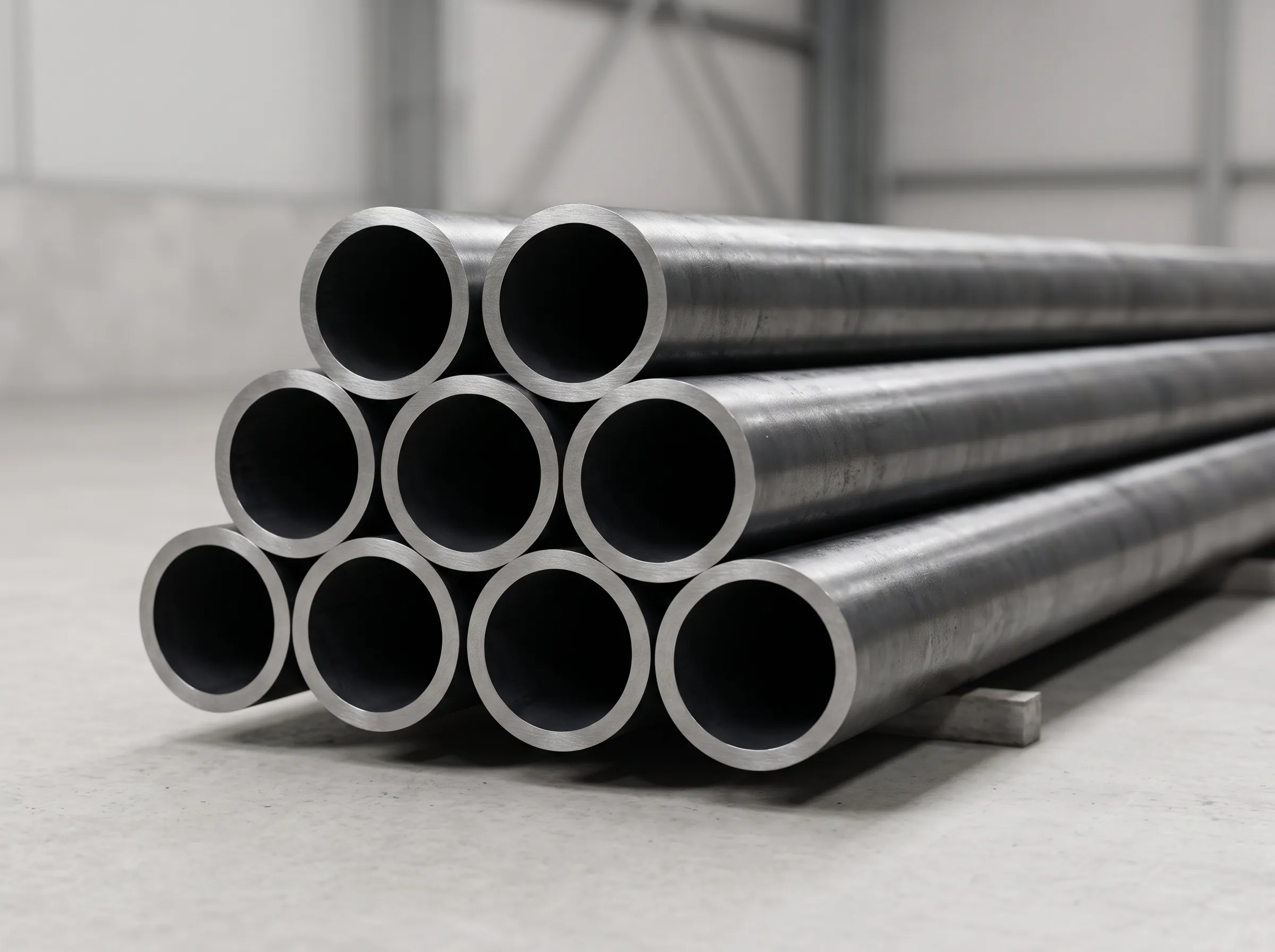
Seamless Pipe
Manufactured from a solid billet without a longitudinal weld seam. Commonly used for high pressure, high temperature and critical industrial applications
What Is the Difference Between MS Pipe, ERW Pipe and Seamless Pipe?
MS pipe describes a pipe made from mild steel, ERW pipe describes a pipe formed and welded using electrical resistance, and seamless pipe describes a pipe produced without a longitudinal welded seam.
The most useful distinction is that material and manufacturing method are separate decisions. A mild steel pipe can be manufactured using ERW, while seamless pipes are manufactured through a different production route.
Need Help Choosing The Right Pipe?
Get expert advice from our Revsol team for your projectv requirements.
Manufacturing Process: How Are These Pipes Made?
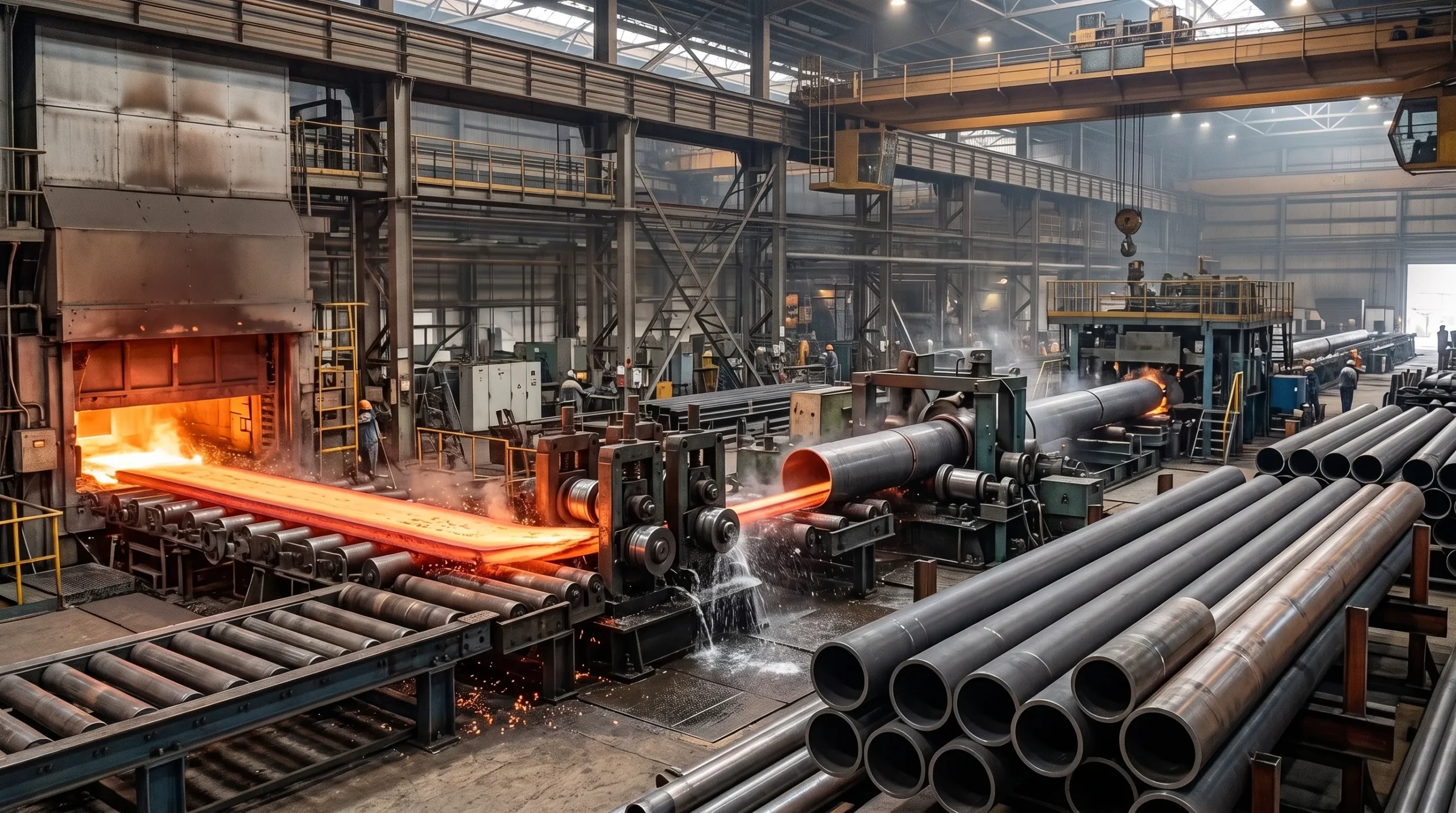
MS pipe manufacturing
Mild steel is a low-carbon steel category commonly used where formability, fabrication, and general structural applications are important. The pipe can be produced using different manufacturing processes, so the label “MS” alone does not tell you whether it contains a weld seam.For purchasing purposes, ask the supplier to identify the material grade, manufacturing method, dimensions, and applicable product standard rather than relying solely on the term MS pipe.
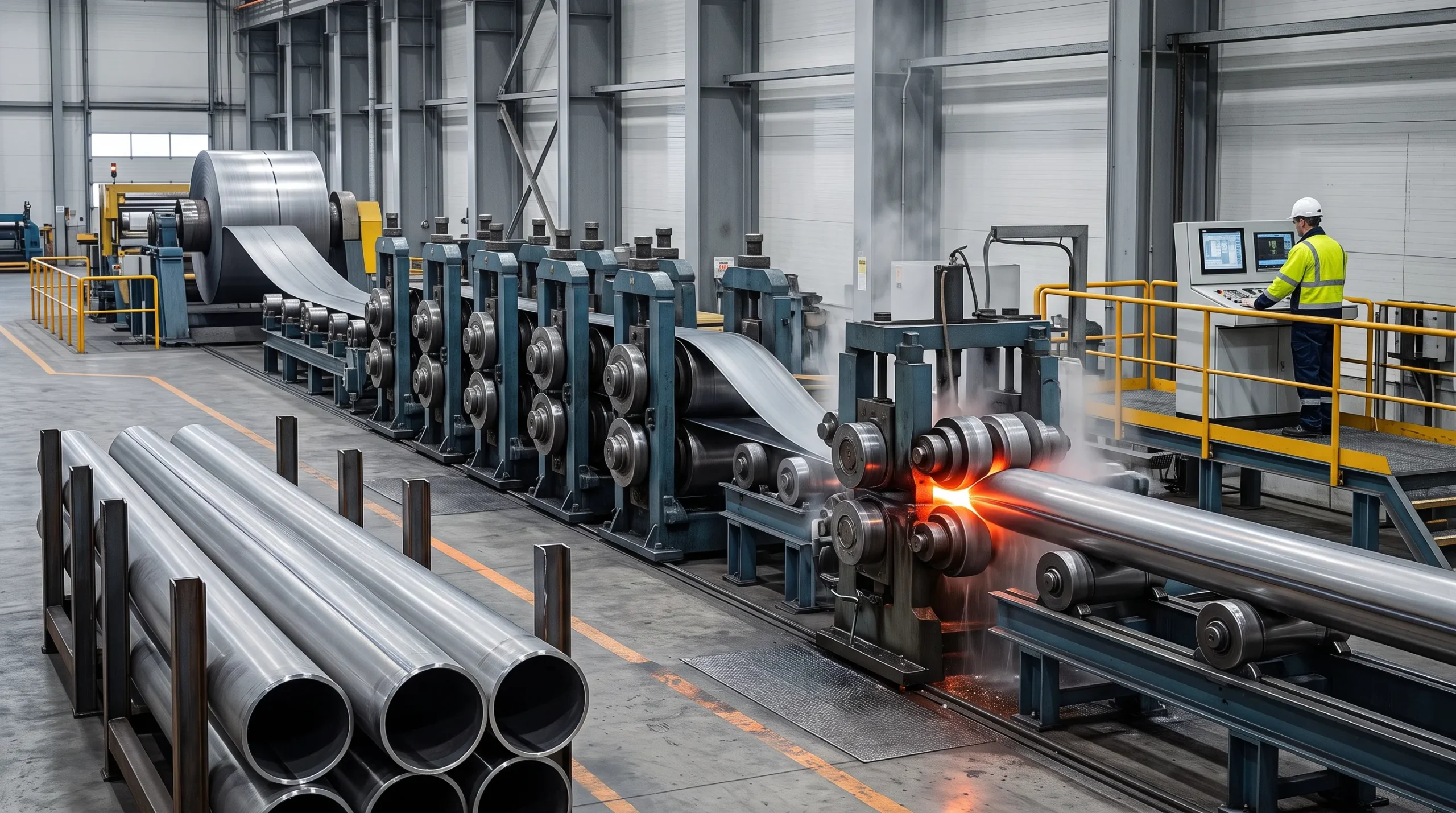
ERW pipe manufacturing
An Electric Resistance Welded (ERW) pipe is made by forming steel strip or coil into a tubular shape and joining its edges through electrical resistance heating and pressure. The resulting pipe has a longitudinal weld seam.Modern ERW manufacturing can produce pipes with consistent dimensions and reliable weld quality when the process, inspection, and product specification are properly controlled.ERW pipes are commonly considered for structural frameworks, fabrication, and suitable industrial or utility applications. Their acceptability for a pressure service depends on the specified grade, manufacturing standard, testing, and governing design code.
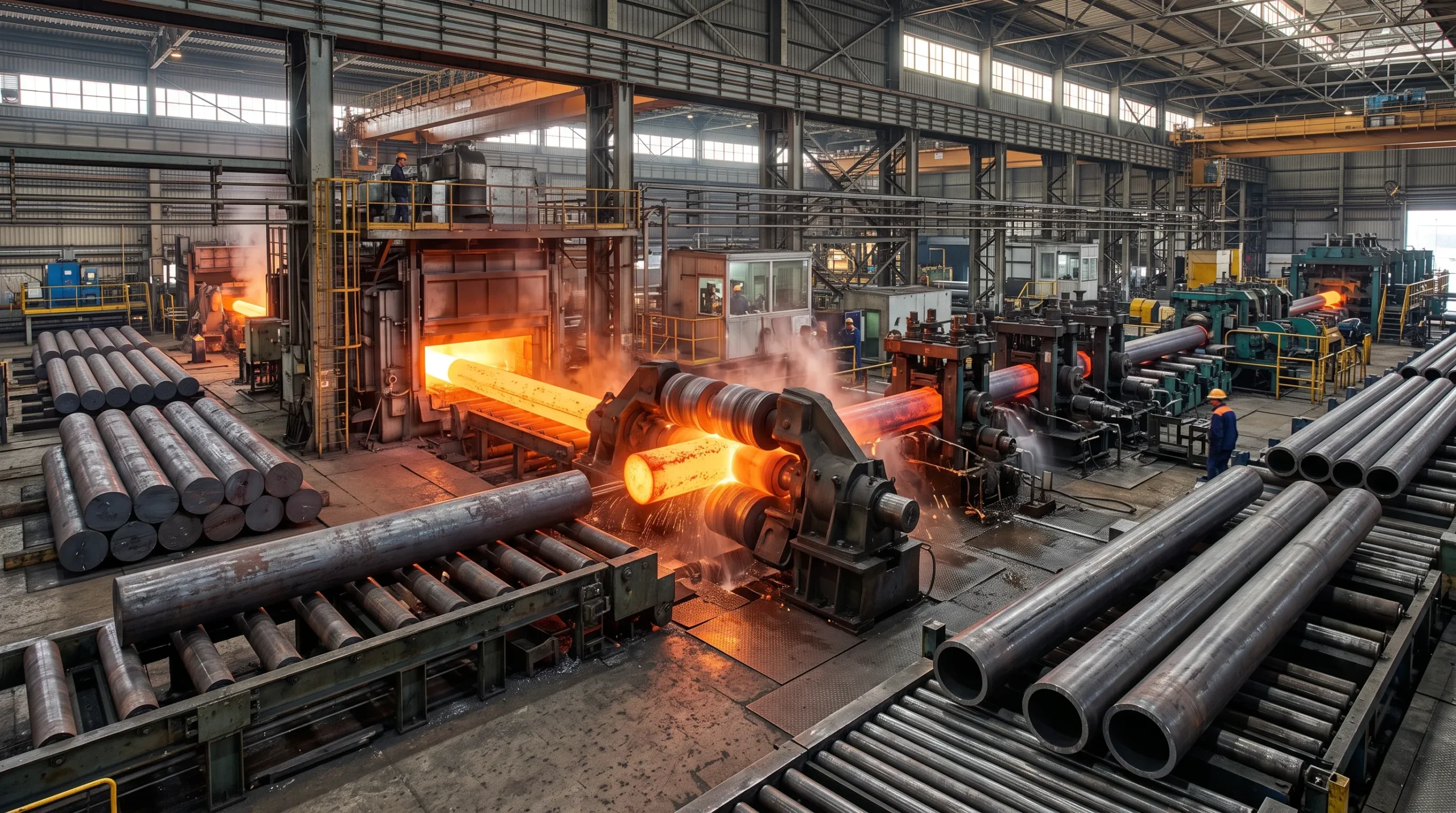
Seamless pipe manufacturing
A seamless pipe is generally produced by piercing a solid steel billet to form a hollow section, followed by rolling, sizing, and other finishing operations as required.Because there is no longitudinal weld seam, seamless construction eliminates seam-related concerns. However, it does not eliminate other possible defects or make the pipe automatically superior for every application. Material quality, dimensional tolerances, wall thickness, testing, and manufacturing control remain essential.
Strength and Pressure Handling
Which is stronger: ERW or seamless pipe? There is no universally correct answer based on manufacturing type alone. The strength and pressure capability of a specific pipe depend on its material properties, dimensions, manufacturing quality, inspection requirements, and design conditions.
A properly manufactured ERW pipe can be suitable for many demanding applications when it meets the applicable specification. Seamless pipe may be selected when the design standard, service conditions, or project specification calls for seamless construction.
Pressure design may require consideration of:
Maximum and minimum operating temperatures.
Design pressure and the applicable code.
Material grade and allowable stress.
Outside diameter and specified wall thickness.
Manufacturing tolerances and corrosion allowance.
Weld-joint requirements where applicable.
Cyclic loading, vibration, and other service conditions.
Inspection, testing, and material traceability.
Do not select a pipe solely because a seller describes it as heavy-duty or high-pressure. Confirm the required specification and obtain the supporting technical documentation.
Cost: Which Pipe Is More Economical in Pakistan?
ERW pipes are often more economical than comparable seamless pipes because their manufacturing process is generally efficient for common sizes. Seamless pipes can cost more because of their production route, although actual prices vary with grade, dimensions, origin, availability, and market conditions.
MS pipe is not a directly comparable third manufacturing category: its price depends on how the pipe is produced and on the product specification.
For a meaningful comparison, request quotations that specify:
- Material grade and manufacturing method.
- Nominal diameter and actual outside diameter where relevant.
- Nominal wall thickness and applicable tolerances.
- Pipe schedule, if specified.
- Required standard and inspection documentation.
- Pipe length and total quantity.
- Coating or surface treatment.
- Delivery location, taxes, and other charges.
Compare the total cost of meeting the project specification rather than comparing prices per piece without checking dimensions or grade.
A lower-cost pipe can be a sensible purchase for an appropriate application. It becomes a false economy when it fails to meet the design requirements or needs premature replacement.
Corrosion Resistance and Service Life
Neither MS, ERW nor seamless construction automatically makes a pipe corrosion-proof.
Corrosion resistance depends on the steel composition, operating fluid, external environment, temperature, moisture, protective coating, lining, and maintenance regime. The presence or absence of a weld seam is not, by itself, a complete measure of corrosion performance.
For example, a bare mild steel pipe exposed to moisture may require a suitable protective coating or corrosion-control strategy. A galvanized product has a zinc coating, but galvanizing should only be specified where it is suitable for the intended service.
For industrial piping, also consider internal corrosion, erosion, chemical compatibility, and the corrosion allowance specified by the designer.
Buying tip: Tell the supplier what the pipe will carry, its operating temperature, and whether it will be installed indoors, outdoors, underground, or in a corrosive environment. These details can materially affect product selection.
Common Applications
Each pipe type is suited to different applications based on project requirements, standards and service conditions.
General fabrication
MS or ERW pipes are suitable for many fabrication projects. Check material grade, dimensions, weldability, and load requirements.
High-pressure or high-temperature service
Choose the pipe specified by the applicable design code. Confirm pressure, temperature, wall thickness, and testing requirements.
Industrial process piping
Select pipes according to process conditions and engineering specifications. Verify material grade, corrosion resistance, and inspection requirements.
Building frameworks and supports
Structural ERW pipes are commonly used for frameworks and supports. Verify structural strength, dimensions, and applicable standards.
General utility piping
ERW or seamless pipes may be used for utility lines. Check fluid type, pressure, temperature, and code requirements.
Oil and gas transportation
Use pipes that meet the required line-pipe standards, such as API 5L or ISO 3183, where applicable. Verify grade and traceability.
These are starting points, not universal approvals. A project specification or applicable code may require a particular manufacturing method, material grade, or level of inspection.
Standards, Grades and Pipe Schedules
Pipe standards define requirements for material, dimensions, manufacturing, and testing. Always confirm the applicable standard and edition before purchasing.
ASTM A53
ASTM A53/A53M covers specified black and galvanized welded and seamless steel pipes. Check the required grade, pipe type, dimensions, and testing requirements.
API 5L and ISO 3183
API 5L and ISO 3183 cover steel line pipes used in oil and gas transportation. Verify the required grade, manufacturing method, testing, and traceability. Not every MS or ERW pipe meets these standards.
ASME B31.3
ASME B31.3 covers process piping design, materials, fabrication, inspection, and testing. Select pipes according to the applicable code edition and project specifications.
What Do Schedule 40 and Schedule 80 Mean?
Schedule 40 and Schedule 80 indicate pipe wall-thickness series. For the same nominal pipe size, Schedule 80 generally has a thicker wall than Schedule 40.Remember: Pipe schedule does not identify the steel grade or guarantee a pressure rating. Pressure suitability depends on the material, dimensions, temperature, and applicable design code.
How to Choose the Right Pipe: A Practical Selection Framework
Use this sequence before requesting a quotation.
Define the application
Determine whether the pipe is for a structural framework, fabrication, water service, or an industrial process.
Identify the operating conditions
For fluid service, establish the design pressure, temperature, fluid composition, and expected loading.
Confirm the governing specification
Check whether the project requires a specific ASTM, API, ISO, or other applicable product standard and design code.
Specify the material
Identify the required grade and any chemical, mechanical, corrosion, or service requirements.
Specify the dimensions
State the nominal size, outside diameter where relevant, wall thickness or schedule, length, and dimensional tolerances.
Define testing and documentation
Identify the required inspection, test certificates, traceability, and any additional quality requirements.
Compare complete quotations
Evaluate technical compliance, total delivered cost, availability, and delivery schedule together.
Common Mistakes When Buying Steel Pipes
Mistake 1: Treating MS and ERW as competing materials
This happens because suppliers and buyers often use trade names as shorthand. It matters because the material label does not fully describe manufacturing quality or service suitability.
How to avoid it: Specify material grade and manufacturing method separately.
Mistake 2: Choosing on price alone
A cheaper quotation may refer to a different wall thickness, grade, length, or standard. That makes the prices difficult to compare.
How to avoid it: Send all suppliers the same written specification and compare equivalent products.
Mistake 3: Assuming seamless always means stronger
The absence of a weld seam removes one potential concern, but other manufacturing defects, material limitations, and dimensional issues can still affect performance.
How to avoid it: Verify the actual grade, wall thickness, product standard, testing, and design requirements.
Mistake 4: Ignoring corrosion protection
Buyers may select an otherwise suitable steel pipe without accounting for outdoor exposure, moisture, or the transported fluid.
How to avoid it: Define the operating environment and specify appropriate coating, lining, material, or corrosion-control measures.
Mistake 5: Confusing pipe schedule with steel grade
A schedule identifies a wall-thickness series; it does not identify the steel’s chemical composition or mechanical properties.
How to avoid it: Specify the grade and schedule or wall thickness independently.
Mistake 6: Accepting undocumented compliance claims
A label or verbal assurance is not sufficient proof that a product complies with the required standard.
How to avoid it: Request applicable mill test certificates, product markings, inspection records, and traceability documents where required.
Conclusion
Understanding MS pipe vs ERW vs seamless pipe begins with separating material from manufacturing method. MS identifies mild steel, ERW identifies an electric resistance welding process, and seamless identifies pipe manufactured without a longitudinal weld seam.
For general fabrication and suitable structural applications, MS or ERW products may offer a practical balance of cost and performance. Seamless pipe is appropriate where the design, governing code, or service conditions require or favor seamless construction. Neither option should be selected without checking the grade, dimensions, wall thickness, inspection requirements, and operating conditions.
For Pakistani buyers, the most effective purchasing approach is to prepare a clear specification, compare equivalent quotations, and verify required documentation before placing an order.
Review Revsol’s pipes and fittings range and contact the sales team with your application, dimensions, quantity, and delivery location to discuss a suitable steel pipe option.
Need MS, ERW or Seamless Pipe For Your Project
Share your requirements with REVSOL to get a suitable product and quotation.
FAQ
ask us
anything
What is the difference between MS pipe and ERW pipe?
MS pipe describes a mild steel material category, while ERW describes a manufacturing process that joins formed steel edges using electrical resistance. An ERW pipe can be made from mild steel, so the terms are not mutually exclusive.
Is ERW pipe the same as seamless pipe?
No. ERW pipe has a longitudinal welded seam, whereas seamless pipe is manufactured without a longitudinal weld seam. Both can be suitable for specific applications when they meet the required product specification and design conditions.
Which is stronger: ERW pipe or seamless pipe?
Neither is universally stronger in every application. Strength depends on material grade, dimensions, manufacturing quality, inspection, and the applicable design requirements. Seamless construction eliminates the longitudinal weld seam but does not guarantee superior performance in every respect.
Which steel pipe is cheaper in Pakistan?
ERW pipes are often more economical than comparable seamless pipes, particularly in common sizes. Actual prices depend on the grade, diameter, wall thickness, quantity, supplier, availability, and delivery requirements. Request comparable quotations for an accurate decision.
Can ERW pipe be used for water supply?
Yes, ERW pipe can be suitable for some water services if its material, coating, pressure capability, product specification, and regulatory requirements are appropriate. Confirm whether the pipe is intended for potable water, industrial water, or another service.
Is seamless pipe always required for high-pressure applications?
No universal rule requires seamless pipe for every high-pressure application. The governing design code, service conditions, material specification, and project requirements determine which manufacturing types are acceptable. Use a qualified engineer to verify the selection.
What is the difference between Schedule 40 and Schedule 80 pipe?
Schedule 80 generally has a thicker wall than Schedule 40 for the same nominal pipe size. Exact dimensions depend on the relevant sizing standard. Schedule alone does not identify the steel grade or guarantee a pressure rating.
Does seamless steel pipe rust?
Yes. Seamless carbon steel pipe can corrode when exposed to moisture, oxygen, or corrosive service conditions. Appropriate material selection, coatings, linings, corrosion allowance, and maintenance may be necessary.